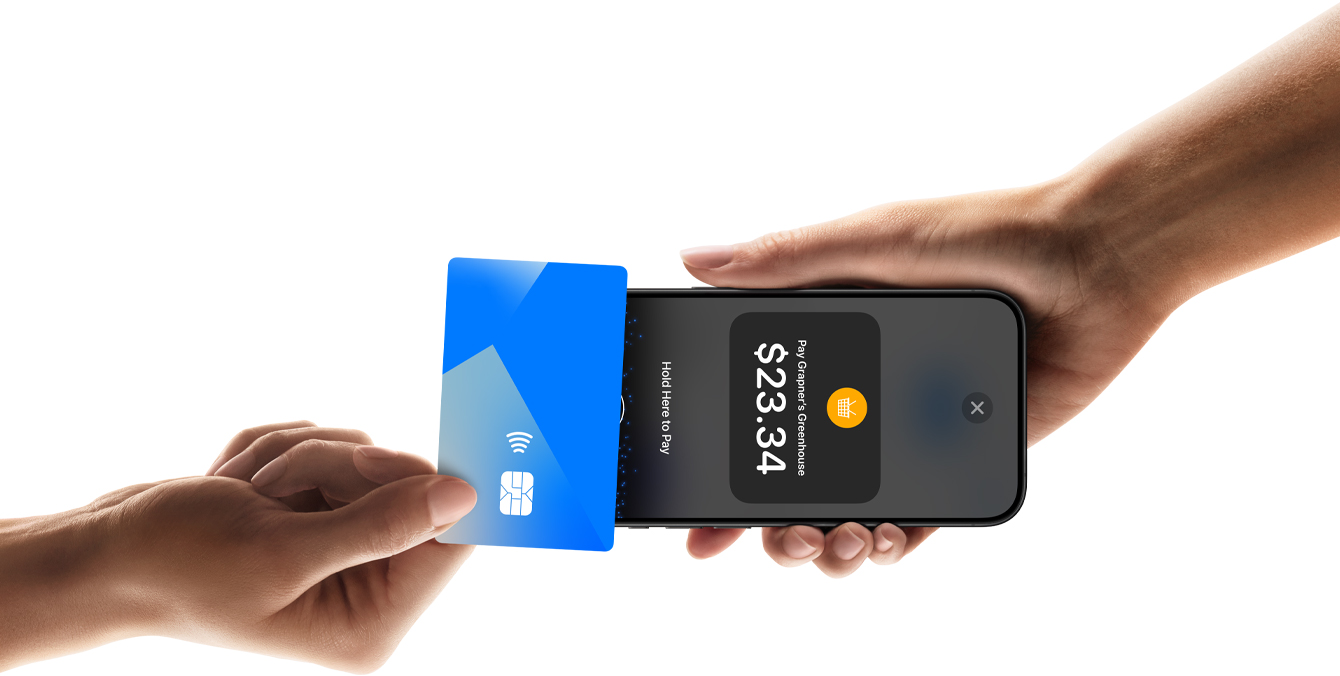
Short answer: yes — outside Quebec, a Canadian barbershop can add a surcharge to credit card payments, capped at 2.4% or the shop's own cost of accepting credit cards, whichever is lower. It applies to credit cards only, needs 30 days' written notice to your processor, and has to be posted at the door, at the counter and on the receipt. Quebec doesn't allow it at all. Below: the rules, wording to copy, the math at 2.8% + $0.30, cash discounts, Quebec and pricing card fees into the menu in BarberFlow.
Can a barbershop add a credit card surcharge?
Yes, everywhere but Quebec. After a court-approved class-action settlement, Visa changed its rules effective October 6, 2022 to let Canadian merchants surcharge Visa credit cards, and Mastercard's surcharging standards took effect the same day. The permission is a card network rule, not a law, and Visa states that provincial or federal law overrides it.
How much can a barbershop surcharge?
The lower of 2.4% and what credit cards cost you. Visa caps a surcharge at the lesser of 2.4% and the average merchant discount rate the shop pays for Visa credit acceptance — your all-in processing cost as a percentage of sales, interchange included — and Mastercard uses the same structure. You can surcharge at the brand level, one rate on every card from that network, or the product level, such as premium cards only, but not both. On a flat 2.8% + $0.30 the effective rate sits above 2.8% at every ticket size, so the 2.4% cap is always the lower number.
Which cards can you surcharge?
- Visa and Mastercard credit cards — yes, consumer and corporate, within the cap.
- Visa Debit, Debit Mastercard and prepaid cards — no. Both networks prohibit it.
- Interac debit — no. Interac's fee page says merchants may not apply a debit surcharge themselves; only the acquirer can, capped at $0.25 and printed on the receipt, and the FCAC tells merchants to ask their processor first.
- Amex and PayPal — set them first. Visa says a Visa surcharge can't be higher than what you charge on Amex or PayPal, and Mastercard ties its rules to those networks' own surcharging limits, so ask your processor before surcharging Visa and Mastercard alone.
What the rules require before your first surcharge
- Written notice, 30 days ahead. Visa requires it to your acquirer; Mastercard to both Mastercard and your acquirer.
- A sign at the entrance. Visa and the FCAC both list the store entrance as a required spot.
- Disclosure at the point of sale. The exact amount or percentage, that the shop charges it and not the network, and that it applies to credit only.
- The dollar amount on every receipt.
- A way out. The FCAC says clients must be able to cancel without penalty before authorizing payment, and pay with debit or cash instead.
- No stacking. A merchant charging a service or convenience fee on card payments can't surcharge as well.
- Refund it with the sale. Visa requires the surcharge to be credited back on a refund, pro-rated on a partial one.
Surcharge disclosure you can copy
Is a surcharge worth it at 2.8% + $0.30?
A $40 cut paid by credit card costs the shop $1.42 — 3.55% of the ticket — and the 2.4% cap recovers $0.96. The $0.30 fixed fee is the part the cap can't reach, so the gap is widest, as a share of the ticket, on small services.
| Service price | Card fee at 2.8% + $0.30 | Fee as % of ticket | Max surcharge (2.4%) | Gap the shop still pays |
|---|---|---|---|---|
| $30 | $1.14 | 3.80% | $0.72 | $0.42 |
| $40 | $1.42 | 3.55% | $0.96 | $0.46 |
| $45 | $1.56 | 3.47% | $1.08 | $0.48 |
| $60 | $1.98 | 3.30% | $1.44 | $0.54 |
| $100 | $3.10 | 3.10% | $2.40 | $0.70 |
A surcharge earns its place when most of your card volume is credit and tickets run large — a $150 cut, beard and colour on a credit card hands back $3.60 of a $4.50 fee. The cost is friction: a sign, a counter script, a credit-or-debit check on every tap, and 30 days of notice.
For most shops, a menu price change is the cleaner answer. A $1 increase collects $1.00 from every client — credit, debit or cash — while a 2.4% surcharge on a $45 cut collects $1.08 from credit card clients only. The tax treatment differs too: the CRA says a surcharge shown and charged separately is consideration for an exempt financial service, so it is not subject to GST/HST, while a price increase is part of the haircut and carries GST/HST — $0.13 on a $1 increase in Ontario.
Can you offer a cash discount instead?
Yes. The Code of Conduct for the Payment Card Industry in Canada says merchants must be able to offer discounts for different payment methods, and different discounts among card networks. Keep it plain: one posted price, and a stated discount for paying a certain way. A cash discount lowers a price; a surcharge raises one, and the cap, the notice and the entrance sign are surcharge rules.
Can a Quebec barbershop charge a credit card surcharge?
No. The Office de la protection du consommateur states that a merchant cannot charge fees when a client pays by debit or credit card. A sign at the register or a verbal warning does not make it legal, the OPC says, and section 224(c) of the Consumer Protection Act bars charging more than the advertised price. That price must be the full amount the client pays, apart from GST and QST. Quebec shops recover card costs through the menu price, and the Quebec GST and QST guide covers how both taxes apply to it.
What the payment card code requires of processors
The revised code took effect on October 30, 2024 and binds the card networks and the processors under them. Three parts matter here:
- Monthly statements. On a flat-rate plan you receive or can access the per-transaction rate at least monthly; other plans show the effective merchant discount rate for each card type. Those figures are what your surcharge cap is measured against.
- Notice of fee changes. Your processor must tell you 30 to 60 days before a new or higher fee, and you can cancel without penalty within 70 days after it takes effect.
- Complaints. A code complaint must be acknowledged within five business days and addressed within 20 business days, with a written response.
How to price for card fees in BarberFlow
BarberFlow doesn't add a surcharge line to the ticket, so a shop taking cards through BarberFlow can't print the surcharge amount on the receipt that Visa and Mastercard require — on BarberFlow, a card fee is covered through the menu price. Every card payment — Tap to Pay on iPhone, the BarberFlow Reader or online — costs 2.8% + $0.30 and cash is free.
Check what cards cost you and set the price
- 1Open Analytics → Revenue
Pick Last 4 weeks. Net Sales shows what the shop kept after tax, card fees and refunds.
- 2Check your credit share and typical ticket
Open Accounting → Payments, set the same date range and filter Card Funding to Credit. Export it and total the Gross column to see how much card volume a surcharge could reach, and note your most common ticket size.
- 3Run the numbers
Enter your card volume and average ticket in the card processing fees calculator. A $45 payment costs $1.56 to process.
- 4Update the price in Catalogue → Services
Open the service and change it under Price, or Levels if it has more than one. A $2 increase takes a $45 cut to $47 and covers its $1.62 card fee.
- 5Check the new price at checkout
From the POS in the app, add the service to a ticket and check the new price before you take payment. A refunded test charge doesn't get its card fee back.
One ticket, one rate, every way to pay
Services, products and tips on one ticket, paid by Reader, Tap to Pay on iPhone, Interac debit, online or cash. Cards are 2.8% + $0.30 per transaction; cash is free.
The five mistakes shops make with surcharges
- Surcharging debit. A tapped phone can carry a debit card. If your checkout can't tell credit from debit, don't surcharge.
- Starting without notice. The 30 days' notice comes before the first surcharge, not after a complaint.
- Charging 3% to match the fee. The ceiling is 2.4% or your effective credit card cost, whichever is lower.
- Adding GST/HST to the surcharge. Shown separately, it isn't taxable, and the CRA says tax collected on it in error still has to be remitted, though refunding it to the client may let you claim it back.
- Surcharging in Quebec. The OPC says no, sign or not, so a shop with an Ottawa location and a Gatineau location runs under two different rules.
Frequently asked questions
Can a barbershop charge a credit card fee in Canada?
Yes, except in Quebec. Since October 6, 2022, Visa and Mastercard have let Canadian merchants surcharge credit cards, capped at the lower of 2.4% and the merchant's cost of accepting them.
What is the maximum credit card surcharge in Canada?
2.4%, or the merchant's effective cost of accepting that network's credit cards if lower. A shop paying 2.8% + $0.30 per transaction is always above 2.4%, so its cap is 2.4%.
Can you put a surcharge on debit card payments in Canada?
No. Visa and Mastercard prohibit surcharges on their debit and prepaid cards, and Interac says a merchant may not add a surcharge to Interac debit itself — only the acquirer can, capped at $0.25.
Is GST/HST charged on a credit card surcharge?
Not when it is shown and charged separately. The CRA treats a separately charged credit card surcharge as consideration for an exempt financial service, so no GST/HST applies.
Is a credit card surcharge legal in Quebec?
No. The Office de la protection du consommateur says a merchant cannot charge fees when a client pays by debit or credit card, and a sign or verbal notice doesn't change that.
Do I have to tell customers about a credit card surcharge?
Yes. The FCAC lists the card networks' requirements: the surcharge is shown at the store entrance, at the point of sale and on every receipt, before the client authorizes payment.
Quick checklist
- Confirm the shop is outside Quebec and its checkout can print the surcharge on the receipt — on BarberFlow, raise the menu price instead.
- Set the surcharge at 2.4% or the effective credit card rate on your monthly statement, whichever is lower.
- Surcharge credit cards only.
- Surcharge Amex at least as much as Visa, or ask your processor how the rule applies.
- Give your processor, and Mastercard, 30 days' written notice.
- Post it at the entrance and the counter, and print it on every receipt.
- Show it as its own line, with no GST/HST on it.
- Compare it with a $1 or $2 menu increase before you commit.
The Tap to Pay guide covers what an iPhone accepts at 2.8% + $0.30, and the no-show policy guide applies the same disclose-first logic to cancellation fees. For the tax on your new menu price, see the sales tax guide for barbershops.
- Surcharging FAQ for businesses — Visa Canada
- What merchant surcharge rules mean to you in Canada — Mastercard Canada
- Merchant surcharges, service and convenience fees, and discounts — Financial Consumer Agency of Canada
- Code of Conduct for the Payment Card Industry in Canada — Financial Consumer Agency of Canada
- GST/HST Info Sheet GI-200 — Application of the GST/HST to credit card surcharges — Canada Revenue Agency
- Payment by debit or credit card: prohibited fees — Office de la protection du consommateur
- Consumer Protection Act (CQLR, c. P-40.1), section 224 — LégisQuébec
- Understanding business fees — Interac Debit surcharge fee — Interac Corp.